Sundarbans is the biggest mangrove forest in the world. The name
Sundarban can be literally translated as "beautiful jungle" or "beautiful forest" in the Bengali language
The name may have been derived from the Sundari trees that are found in
Sundarbans in large numbers.
The
Sundarbans stands in the south-east
tidal area
of
Bangladesh.
Sundarbans surrounding
in the costal area of the
Bangladesh. The
Sundarbans along the Bay of Bengal has evolved over the millenarian
through natural deposition of upstream sediments accompanied by intertidal segregation.
The
Sundarbans play an important role in the economy of the southwestern region of
Bangladesh as well as in the national economy. It is the single largest source of forest produce in the
country. The forest provides raw material for wood based industries. In addition to traditional forest produce like timber, fuelwood, pulpwood etc , large scale harvest of non wood forest products such as thatching materials, honey, bees-wax, fish, crustacean and mollusk resources of the forest takes place regularly. The vegetated tidal lands of the
Sundarbans also function as an essential habitat, nutrient producer, water purifier, nutrient and sediment trap, storm barrier, shore stabilizer, energy storage unit and aesthetic attraction.
The forest also has immense protective and productive functions. Constituting 51% of the total reserved forest estate of
Bangladesh it contributes about 41% of total forest revenue and accounts for about 45% of all timber and fuel wood output of the country . A number of industries (e.g. newsprint mill, match factory, hardboard, boat building, furniture making) are based on the raw material obtained from the
Sundarbans ecosystem. Various non-timber forest products and plantations help generate considerable employment and income generation opportunities for at least half a million poor coastal population. Besides production functions of the forest, it provides natural protection to life and properties of the coastal population in cyclone prone
Bangladesh.
Sundarbans has huge types of
trees, wild animals and birds. Sundori, kayora, goran, bayen, dundol are the valuable plants of sundorbon.The
Sundarbans is very rich in wildlife.
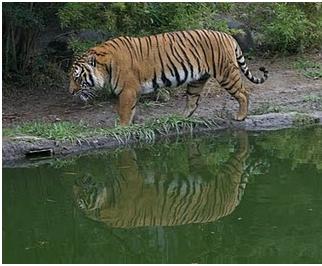
Sundarbans has lots of wild animals and birds, the world famous
Royal Bengal tiger are found in this forest, the most beautiful spotted deer, crocodile, wild cock, python, monkey, snacks and different kinds of birds. Three are 360 tigers in
Sundarbans nowadays the
Royal Bengal Tigers are losing day by day so, Bangladesh Forest Department starting The Sundarban
Tiger project for save the tigers . The idea for creating such a project was first developed during a field survey in 2001 conducted by Md. Osman Gani, Ishtiaq U. Ahmad, James L. D. Smith and K. Ullas Karanth. They realized that the
Sundarbans mangrove forest at the mouth of the Ganges River contained probably one of the largest populations of wild tigers left in the world. As such, there was an urgent need to start measures that would ensure the protection of this precious area.The Save the Tiger Fund and the United States Fish and Wildlife Service generously donated funds to support the initial phase of research that aims to collect data on tiger ecology using telemetry, and study the tiger’s environment by assessing its habitat and prey.
Now
Sundarbans is
attested in the world heritage site of
UNESCO. There is a lot of tourist spot in
Sundarban such as kotka, Hiron point, herbaria
tourism center, jalkor dublar choar etc.